Introduction to Vitiligo Information Resource (VIRdb 2.0)
A database for vitiligo biomarkers and its comorbidities.
Vitiligo is a complex skin disorder characterized by the loss of pigment-producing cells. Understanding the mechanisms behind this condition requires synthesizing information from various sources, including gene expression changes, relevant protein targets, potential therapeutic compounds, and the intricate networks that connect them. Researchers often find this data scattered, making it challenging to gain a holistic view and expedite discoveries. Additionally, understanding the interactions between vitiligo and other health conditions (comorbidities) adds another layer of complexity.
To address these challenges, our research team developed VIRdb 2.0, an interactive resource that integrates diverse datasets relevant to vitiligo pathogenesis in one place.
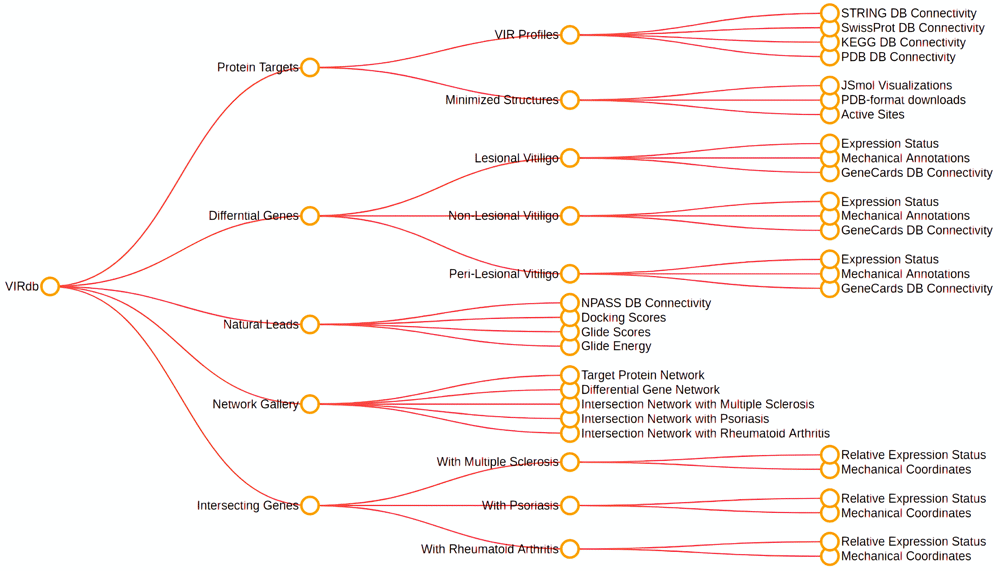
What VIRdb 2.0 Offered
#-
Integrated Data: Brought together information on differentially expressed genes (DEGs) in vitiligo, curated protein targets, and natural compounds with potential relevance.
-
Network Analysis: Featured gene-gene and protein-protein network visualizations derived from our analyses, helping researchers explore biological interactions.
-
Comorbidity Focus: Specifically designed to support the interactive analysis of conditions often associated with vitiligo, using co-expression network approaches.
-
Interactive Exploration: Allowed users to dynamically explore the data tables and network graphs.
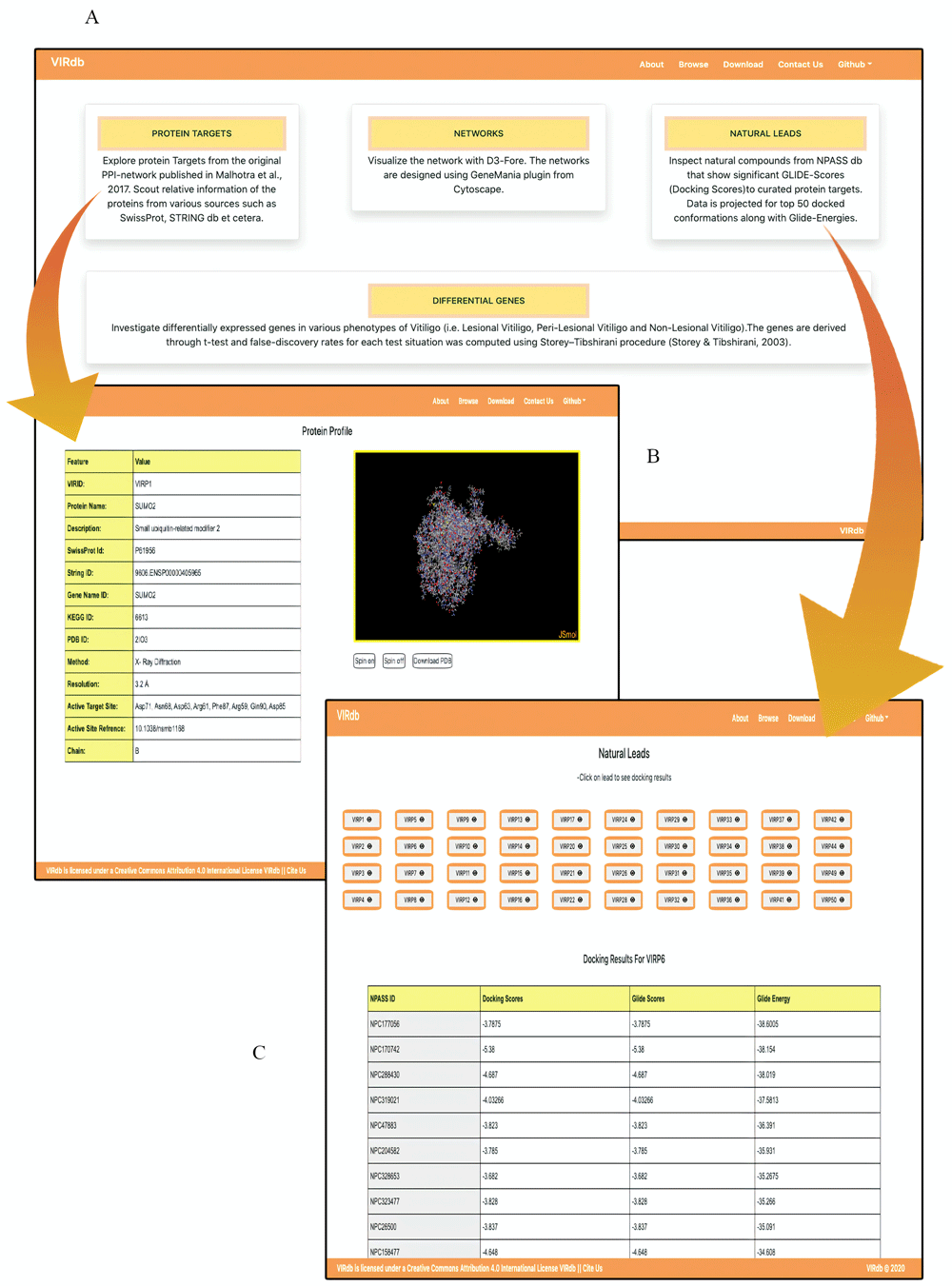
Why VIRdb 2.0 Was Created
#The goal was to give researchers:
-
A centralized hub for diverse vitiligo-related data.
-
An easier way to spot potential therapeutic targets and pathways.
-
Interactive exploration of the biological networks and comorbidities associated with vitiligo.
Accessing VIRdb 2.0 Resources
#-
Database Link: https://vitiligoinfores.com/
-
Read our publication: Srivastava, Talwar, Yadav, Choudhary, Mohanty, Bharti, Narad, & Sengupta (2021). F1000Research. https://doi.org/10.12688/f1000research.25713.2
Although the live database may currently be unavailable, the publication details the findings and approach.
A Collaborative Development & My Role
#VIRdb 2.0 was a team effort across vitiligo biology, bioinformatics analysis, data curation, and web development. While the team worked on data generation, analysis, and curation, my contribution focused on visualization, particularly the interactive network graphs. I used D3.js to build dynamic, explorable views of the gene and protein interaction networks identified by our team’s analysis.